Pressure to Perform

May 1st, 2012 by Noeleen

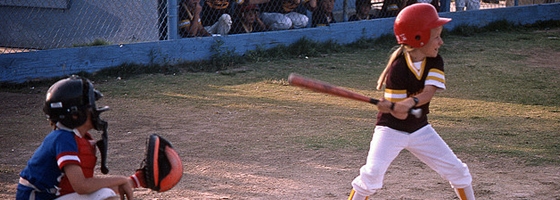
“Feel the breeze!” the shortstop shouted at me.

Much as I wanted to hit her at that moment–she wasn’t wrong. I didn’t even come close to connecting with the pitch. But if I had, it would have sailed to the moon. I nearly did a 360 after my missed swing. That’s how badly I wanted to rip the cover off the ball.

The game was on the line. It was the bottom of the ninth inning. We were down by two– with two runners on base. There were two outs and I was at bat, facing a full count. One more swing like that and the game was over.

Time Out

I stepped out of the box and collected myself. Instinctively, I realized that I was putting too much pressure on myself. I didn’t need to hit a home run. I just needed to hit the softball.

I stepped back into the batter’s box and waited for my pitch. It was a little high. It was probably ball four, but I liked it and I wasn’t batting clean-up for nothing. I killed that ball. It didn’t land on the moon, but it nearly cleared the left field wall. The outfielder mistimed her jump and bobbled the ball. It was an inside the park home run! We won!

Gut Check

It was over a decade before I thought about that at bat again. I was watching my TV news live shots and I found them lacking. They were good, but they weren’t great. They weren’t memorable. I wasn’t loose. I wasn’t charismatic. I didn’t look comfortable. In short, I was trying too hard.

It took me awhile but I realized what my problem was: I was putting too much pressure on myself to be perfect. I thought I needed a perfect live shot to put on my resume tape (“escape tape”) to get a better job in a bigger market. What I needed to do was relax.

Right Mindset

The next time I went live on breaking news I decided to roll with the punches. I talked about what was happening around me. I walked and talked. I never once thought about whether this would be perfect for my resume tape. I just did my job to the best of my ability, and I was great! I watched the tape back the next day and I thought, I’m back!

Perfection Trap

Most of us get caught up in being perfect, especially if we are doing something that is new to us. It’s not easy to give speeches when you’re terrified of public speaking. It’s hard to give good, concise answers when a reporter is asking you questions if you’ve never been interviewed before. It’s also tough to look and sound perfect every time you go live when you’re working 12-hour days in TV news.

My Advice

Cut yourself a break. Not every word you say will be enunciated perfectly. You won’t always project great charisma and energy, especially at the end of a long day. And sometimes you’ll make a mistake. It happens. No one is perfect all of the time and those that are often aren’t worth remembering.

In my opinion, greatness comes in those moments when you let go, trusting that your best instincts will win out.


Share

Perfect Speeches

March 23rd, 2012 by Noeleen

We’ve all sat through long and boring speeches or presentations. We go on a mental vacation and think about what we want to eat for lunch. Maybe we start writing a grocery list in our heads? We’d rather be anywhere but here. Why? Not only is it not a perfect speech, but the speaker’s approach is far from perfect.

In many instances, we are bored because the speaker…

a. doesn’t know how to edit himself

b. didn’t take the time to organize her thoughts

c. doesn’t really have command of his subject matter

Perfect Speech Preps

Perfect speeches require lots of preparation and practice. They need to be carefully researched and thought out. Each point and counterpoint needs to be weighed. And most importantly, perfect speeches need to be edited! Everyone knows it is much harder to give a cogent five-minute speech than it is to ramble in front of an audience for an hour.

That’s why I was so impressed with a speaker that I stumbled upon last week.

Example of  Perfect Speech

It was an unusually warm day in Chicago in March. (It was 80 degrees Fahrenheit.) As such, the older church was more than a little warm. It was also the day after St. Patrick’s and many people looked a little worse for wear.

When it came time for the sermon, the priest, reading his audience very well, started with a joke. It was well told and got a big laugh from the congregation. He held his audience in the palm of his hand.

Next, he said that he was taking a little survey. “Would anyone object if, on this warm day, I cut to the chase with my homily?”

Seeing no hands, he said, “Great. We’re in agreement.”

“The Irish are great poets, so in honor of St. Patrick’s Day I thought I’d tell you a little poem.”

He went on to deliver about eight lines of poetry—written by him—that perfectly summed up his message.

When the priest was finished, people turned to each other and smiled. There were more than a few nods of understanding. Almost everyone seemed to beam at him with looks of admiration and gratitude.

In approximately four minutes the priest told a joke, got the audience on his side and delivered his message successfully and succinctly. In short, it was the perfect speech.


Share

Presenting Under Pressure

March 16th, 2012 by Noeleen

It was St. Patrick’s Day. I had just finished watching my Irish dancers perform for their friends and family. I was still beaming with pride when one of my youngest dancers flung herself into my arms after coming offstage.

“I forgot my step,” she sobbed into my neck.

“But you kept going. You did exactly what I told you to do. No one even noticed. Remember, no one else knows the steps except for you. Right?”

“Yes,” she said as she hiccupped.

“You did great! Even better than if you had done everything as planned. Now you know that no matter what happens, you’ll be just fine. It shows me that you’re great under pressure.”

“So I did good?” she asked.

“Yes!!!”

Presentation Tip


Twenty years later, I am still giving that same advice. But now I give it to my presentation skills clients.

“Always remember: no one knows exactly what you were going to say except for you.”

Yes, some people may know the slides in your deck, but you can always say that, in the interest of time, you decided to skip a certain section or statistic. You can also say that you planned to address the points (that you skipped) during the Q & A.

What you can’t and shouldn’t say, “Oh, I forgot to mention this issue…I just remembered this statistic.”

When you backtrack, people think you’re disorganized or that you don’t have command of your subject matter. As a result, you lose credibility with your audience. But if you keep going, your audience will never be any the wiser.

And later, if they find out that you blanked on something and kept going, they may even admire you for your ability to tap dance and deliver under pressure.

Share

Networking Wingman

March 7th, 2012 by Noeleen

“You always talk about being memorable. But how do I do that at a large networking event?” my client asked me.

We were working on his elevator speech and he said that he found it hard to stand out in a room filled with people.

“There are lots of ways,” I said. “It all depends on your personality and your comfort level in approaching strangers. The key is to play to your strengths.”

Example

I told my client about a networking event that my friend and I attended on Mardi Gras. My friend is very outgoing and convivial. There are no strangers in his life; only friends he hasn’t made yet. Not only does he know how to work a room, he is genuinely interested in everyone he meets. Beyond that, he knows how to make a lasting impression. Because it was Mardi Gras, he wore a couple of strands of beads. It was not only a great way for people to remember him, but it was a great conversation starter. He played to his strengths.

What if You’re Shy?

I am a very different type of networker. I am not nearly as outgoing as my friend. I will never get around to speaking to everyone in a room. Rather, I will focus on meeting a handful of people. I will likely have in-depth conversations with those people. As a result, I usually come away with very strong connections. My buzz comes from a handful of people who say, “Wow. I really liked her. Did you meet her? No? Oh, that’s a shame. She’s really great at what she does.” That’s how I play to my strengths.

Still Not Sure What to Do?

If the idea of going up to strangers is terrifying to you, try going to an event with someone you know. It’s especially helpful if your friend is really outgoing and memorable like mine. Think of him as your networking wingman. Watch what he does. Allow him to introduce you to people. Then as the event wears on, fly solo. Force yourself to go up to others. Like anything else, networking requires practice. The more you do it, the better you’ll get.


Share

Speaking with an Accent

February 16th, 2012 by Noeleen

My parents are from Ireland. I grew up in a melting pot neighborhood in Chicago. I travel internationally to work with clients whose first language is not English. As such, I am used to listening to people speak with various accents.

Working with Clients

With few exceptions, my clients’ English is quite good. Yet it is rare that I meet someone, who is confident in their ability to communicate in a language that is not their native tongue.

The biggest issue that I encounter: people trying to Americanize/Anglicize their accent to the point that their speech is stilted or painfully slow. When I point this out to them, I always tell actress/comedienne Fran Drescher’s story.

A-ha! Moment

Drescher is from Queens, New York. She is easily recognized by her “New Yawk” accent. Drescher felt that accent was costing her a lot of acting roles, so she went to a speech coach to get rid of it. Much to her surprise, she wasn’t pleased with the end result. Drescher felt like she had lost all spontaneity in her speech. She was thinking about it too much and that severely hampered her comedic timing. So what did she do? Drescher decided to speak in her own voice. It became her signature. It made her memorable! It landed her a successful television series.

Advice

My advice to clients: Embrace who you are and where you are from. Most people like accents. They make you who you are. Yes, you need to be understood. But if you’re appearing on-camera, you also need to be memorable and comfortable in your own skin. You never will be if you’re focused on sounding like someone else.


Share

Professional Head Shots

January 23rd, 2012 by Noeleen

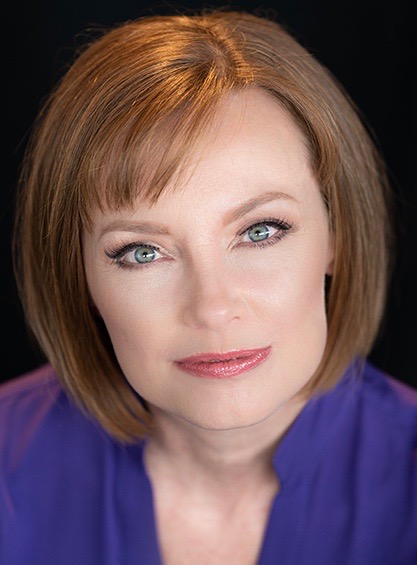
You’re looking at my professional head shots. They were shot by the wonderfully talented Paul Audia.

I am often asked about head shots on twitter. How do I find a photographer? How much should I pay? What should I wear? How do I know which side is my good side? Should I airbrush my pictures?

Here are your answers:

1. How do I find a photographer? Find someone whose head shot you like. Ask who shot it. Check out the photographer’s website. Ask whether the photographer has experience working with non-models. This is critically important because some excellent photographers don’t have the patience or the personality to work with amateurs. You want someone who does great work AND likes working with real people.

2. How much should I pay? If you’re lucky, you can find someone really great for under $300.00. If you’re on a budget, ask friends if they know anyone with a great camera, who would be willing to take a shot of you. (Read below for details about special pricing for a session with Paul Audia through my friend, Sima Dahl.)

3. What should I wear? Wear bold, solid colors. Steer clear of prints or patterns. Choose a color that looks good on you. AND if this is a professional picture, make sure what you’re wearing is appropriate for your business. For example, my brother is an attorney and I would tell him to wear a suit for his picture. You can also change it up. I wore my sapphire blue top for a creative business look and my purple jacket for more of a corporate look. I consult with both groups of people.

4. How do I know which side is my good side? Ask a friend to take pictures of you while you’re looking to the right, left and straight ahead. For most people it is obvious which side is best. Some people are lucky and they have options. For me, straight on is best.

5. Should I airbrush my pictures? That’s entirely up to you. Personally, I only want a little airbrushing. I don’t want my pictures to look like someone else. I subscribe to the L’Oreal tagline when it comes to airbrushing…”You, only better.”

My Experience

Normally I hate sitting through photo sessions. I know that’s an odd thing for a former TV news reporter to say, but it’s true. I can talk on-camera all day long in front of thousands of people. (And I have.) But when it comes to photo sessions, I am just never really comfortable. I hate sitting still and holding poses. BUT finally I found someone I loved. Paul Audia.

Audia truly is one of the most gifted, nicest photographers that I have ever worked with. Not only is he a brilliant photographer, but he’s a lighting genius. As such, your photos won’t need much airbrushing. Best of all, he put me at ease right away. He quickly assessed what angles were best for me and he gently directed me throughout the shoot. It only took him 30 minutes to take more than 100 shots. Of those– I probably loved at least 30 of them.

Advice 

Finding a great photographer, whom you really like, is the best advice I can give you in terms of taking a great head shot.

And if you’re in Chicago, I recommend that you take advantage of two special sessions that my friend, Sima Dahl, has arranged for head shots with Paul Audia. Click the link for more details. In a nutshell, normally it costs almost $500 for a session with Audia. (He has shot President Obama and other celebrities.) Through Sima, you can get one photo (with minimal airbrushing) for $185.00.

http://bit.ly/yMfHGS

Share

On-Camera Makeup for Men

December 29th, 2011 by Noeleen

After yesterday’s blog on makeup for women, I received many emails from men wanting to know whether they should wear makeup on-camera. YES!

Never fear you don’t need to buy a liquid foundation. You need some type of powder (pressed or loose) that will keep the shine off your face. It’s a fact that we all sweat under hot camera lights, so you need something to prevent that sheen of sweat from forming on your upper lip, forehead and/or nose. (And if you’re bald, you might need to dust some powder on top of your head.) Laugh all you want, but you’ll thank me later when you don’t look like the anchor in Broadcast News with flop sweat.

What Should You Buy?

Your options run from loose powder to pressed powder. The loose powder is usually packaged in a round container. The pressed powder will be found in a compact. If you can, try to find a shade that matches your skin tone. If that’s too difficult, look for translucent powder that doesn’t add any color, it’s sheer and just absorbs moisture.

One word of warning– the loose powder tends to be messy. It can get all over the place if you shake out too much. A compact is much easier. It comes with a powder puff or sponge and all you do is swipe it on the pressed powder and Voila! You’re ready for your close-up.

Brands

If you’re shopping in a drugstore, try NYC, Physician’s Formula or Coty Airspun for loose powder. For pressed powder in a compact, try Cover Girl or Maybelline. Both are available in a wide variety of shades.

If you’re willing to spend a little more money–and you are brave enough to walk into a MAC makeup store– I highly recommend their Studio Fix Powder Plus Foundation. It’s $26.50 and worth every penny.

Final Note

Remember, if you choose a makeup that adds color to your face, you will also need to put makeup on your neck. Otherwise you’ll have have this terrible two tone look i.e. a darker face and a lighter neck. Both your face and neck should be the same shade.

Share

On-Camera Makeup

December 28th, 2011 by Noeleen

When I first started out in TV news, a makeup artist told me, “If you feel comfortable walking down the street with the amount of makeup you have on, you aren’t wearing enough to be on-camera.” (She knew that I was a girl who went for a natural look in my everyday life.)

Even with the advent of High Definition Television that still holds true BUT now you need to make sure your foundation melts into your skin. Otherwise we’ll really see every imperfection. In other words, the days of heavy and/or pancake makeup are over. Or they should be if you want to look your best on-camera.

HD Makeup

For years, I have recommended that clients go into MAC stores and ask artists to help them purchase on-camera makeup. Lately, I haven’t had great customer service experiences with MAC, so I hesitate to wholeheartedly recommend them. But you can still meet great MAC makeup artists who will help you at their stores.

If you’re doing this on your own, there are two HD liquid foundations that I recommend.

My hands down favorite, especially if you have sensitive skin, is Koh Gen Doh’s Moisture Foundation. A Hollywood makeup artist introduced me to it at the end of the summer. It melts into your skin and a little goes a long way. Plus my sensitive skin LOVES it. You can find it online at Sephora or on Koh Gen Doh’s website. You might also try contacting Koh Gen Doh’s delightful customer service reps. When I emailed them about shades, they offered to send out samples that helped me choose the best one for me.

My second favorite HD makeup is Smashbox’s High Definition Healthy FX Foundation with SPF 15. This also melts into your skin with a wide range of shades. It goes on best when applied after Smashbox’s Photofinish Foundation Primer. You can find both at Ulta, Sephora or on Smashbox’s website.

Share

Clients “On Trial” in the Media

December 1st, 2011 by Noeleen

I work with a fair amount of attorneys involved in high profile cases. Sometimes I work with the attorneys one-on-one. I teach them how to try their cases in the media. I explain how to answer a question without answering it i.e. there’s a gag order but the reporter wants some sort of statement. I also teach attorneys how to shorten up their speeches and speak in soundbites.

Other times, I work directly with their clients. Before I do, I help the attorneys understand how their client’s testimony will play out in front of jurors and in the media. I work with the attorneys on their client’s testimony in the courtroom, as well as their soundbites in the media. At the end of the day, the messaging is much the same in both arenas.

Jose Baez and Gary Giordano

This morning I turned on Good Morning America and there was Jose Baez (Casey Anthony’s attorney) with his newly released client, Gary Giordano. Giordano was held in Aruba for 116 days, suspected in the disappearance of his girlfriend, Robyn Gardner, while they were snorkeling in Aruba on vacation. Authorities focused on the fact that Giordano had taken out a $1.5 million travel insurance policy on Gardner the day before they left for Aruba. But ultimately police in Aruba were unable to make any charges stick. Giordano was released. He arrived back in the U.S. yesterday morning.

Mistake: GMA Interview

In my humble opinion, Jose Baez should never have let his client speak in public. He came off as very, very defensive. He also didn’t appear to be terribly bright. To be fair, he just got back from Aruba and I am sure that he was exhausted. (All the more reason not to subject him to a network news interview.)

From a purely superficial point of view, Giordano looked a little like a snake oil salesman that you don’t quite trust. Right or wrong—people make judgments, based on the way you look. Giordano’s two-tone hair (grey sideburns and reddish hairpiece on top) made me think of a desperate salesman, who was trying to offload some product that didn’t live up to its claims.

It was also a huge mistake to have Giordano’s three sons in the background of that interview. It looked staged and the boys looked uncomfortable. Why are you dragging them into this? Homecoming or not– they don’t need to be there. (To be fair, this could have been the idea of a producer at Good Morning America. But based on the way Robin Roberts referenced their presence, I don’t think so.)

Bottom line:

To be clear—I don’t know if Giordano is guilty. That’s not for me to say. I do know that his appearance on Good Morning America did nothing to help his public image. If anything—it hurt his image. And while Jose Baez came off looking and sounding good—I do question his judgment regarding his responsibility to his client. He did not do Giordano any favors today.

Postscript:

I don’t think any amount of media training would have helped Giordano today. I think he was too exhausted and emotionally spent to have been effective at communicating his message. If Baez had really been looking out for his client, he wouldn’t have let him do that interview. Baez could have—and should have—handled that interview on his own. Then at a later date—he could have offered up an exclusive interview when Giordano was better prepared to defend himself.

Share

Giving Thanks

November 21st, 2011 by Noeleen

The first 12-18 months I was in business, I produced many corporate videos. But for the last 5-6 years, my core business has been media training and presentation skills coaching.

I still produce the occasional video, especially if it’s for a good cause. Earlier this year, I produced one about the tornado that ripped through Joplin, Missouri at the end of May. It highlighted the plight of those who were victims of the tornado, as well as those who were generous enough to volunteer their time to help others.

As Thanksgiving approaches, I thought I’d share that video with you as a reminder of how much we have to be grateful for.

Click on the link below to watch it.

Joplin, Missouri Tornado YouTube Video

Share